
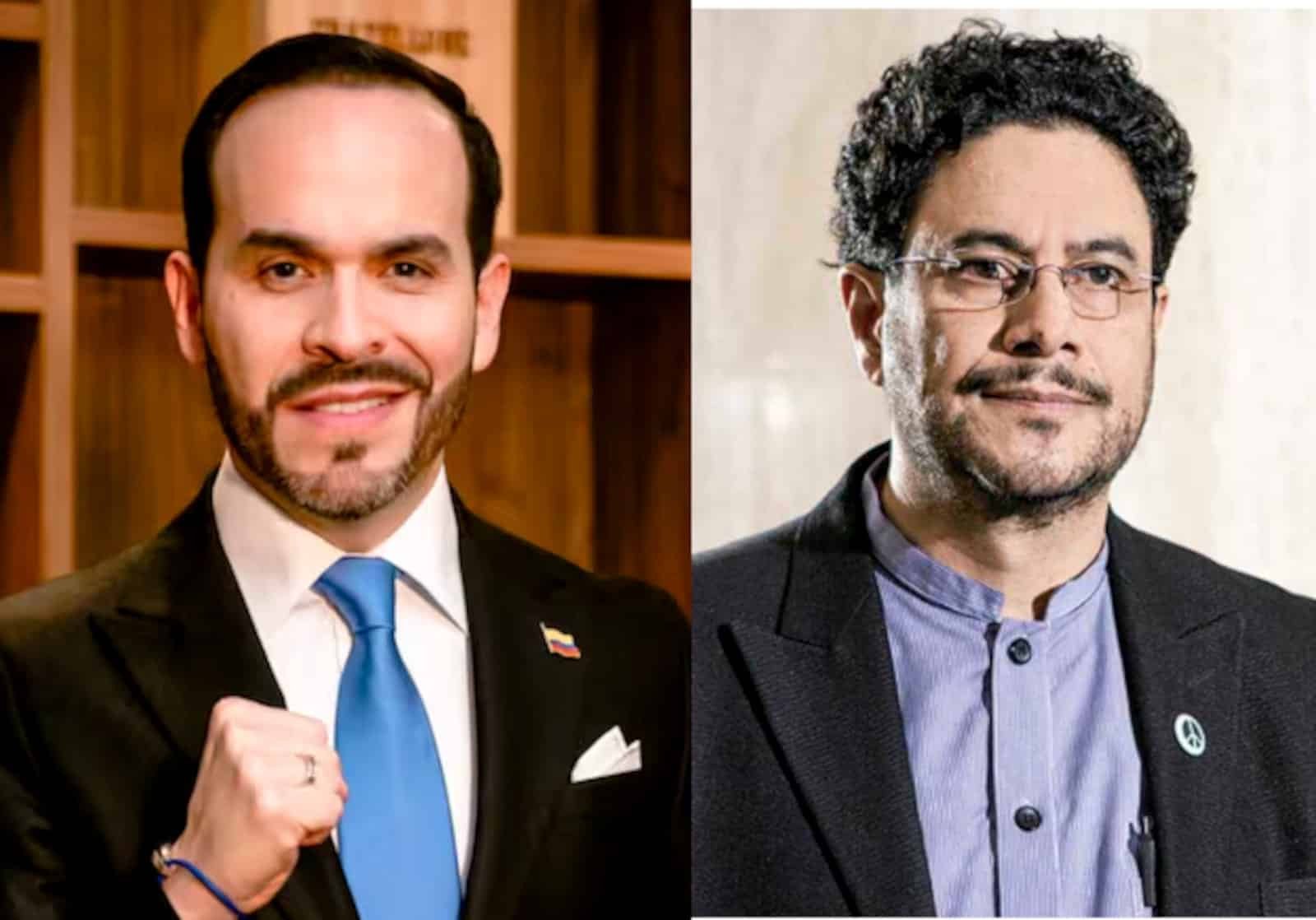

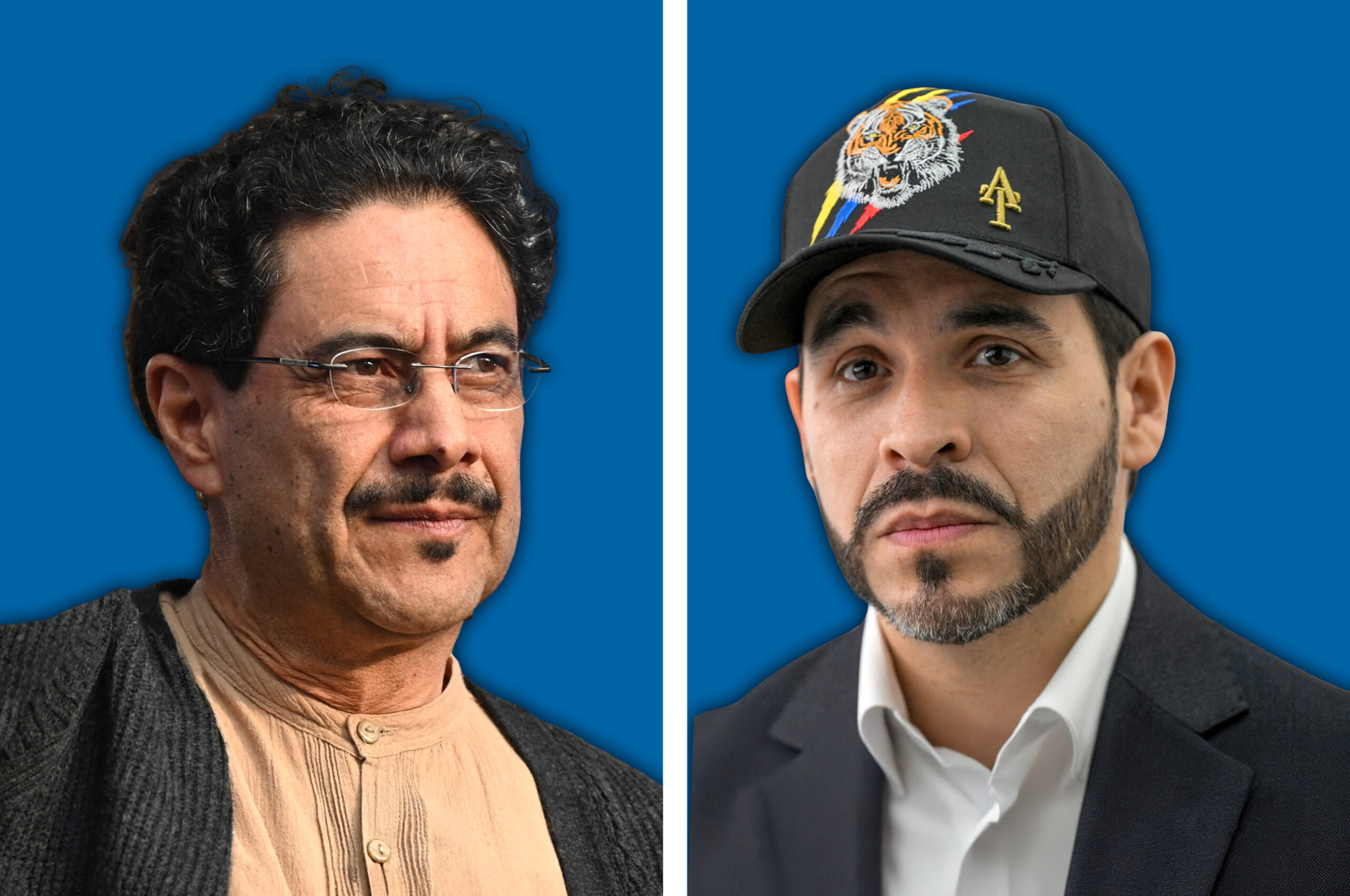
Colombia 2026 presidential election has delivered one of the most dramatic political moments in the country’s recent history. On May 31, 2026, Colombian voters went to the polls for the first round of a race described by analysts across the political spectrum as a genuine crossroads — not just for domestic governance, but for Colombia’s global image, its booming tourism sector, and its relationship with the rest of the world. The results surprised many observers: right-wing outsider Abelardo de la Espriella finished first with approximately 43.7% of the vote, narrowly ahead of leftist senator Iván Cepeda, who secured around 40.9%. Center-right candidate Paloma Valencia, who had been considered a leading contender through much of the campaign, failed to reach the runoff. The two remaining candidates now face each other in a second-round vote on June 21, 2026 — a stark left-right showdown that will define Colombia’s trajectory for the next four years and send a powerful signal about what kind of country Colombia intends to be on the world stage.
For international travelers, digital nomads, tour operators, and foreign investors who have been watching Colombia’s extraordinary rise as a global destination, the Colombia 2026 presidential election is far more than a domestic affair. The policies implemented by the next president will directly shape the security environment in key tourism regions, the regulatory climate for hospitality businesses, the strength of Colombia’s diplomatic ties with its largest source markets, and the future of progressive programs like the Digital Nomad Visa that have drawn tens of thousands of location-independent workers to cities like Medellín and Bogotá. This article covers everything you need to know about the Colombia 2026 presidential election from a tourism and international openness perspective — without taking sides.
Colombia 2026 Presidential Election: The Tourism Backdrop
To fully understand what is at stake in the Colombia 2026 presidential election, it is essential to appreciate just how dramatically Colombia’s tourism sector has transformed over the past decade — and especially over the past three years. Colombia is no longer a destination people need to be convinced to visit; it is a destination people are actively choosing over established competitors, drawn by its extraordinary biodiversity, vibrant urban culture, world-class gastronomy, and a reputation for warm, welcoming hospitality that has replaced the stigma of an earlier era.
Between August 2022 and December 2025, Colombia welcomed 22 million international visitors — a staggering 134% increase compared to the equivalent period under the previous administration. In 2025 alone, the country surpassed 10.2 million international movements, growing 6% over 2024 and establishing Colombia as the leading tourist destination in South America and third in all of Latin America, behind only Mexico and the Dominican Republic. Tourism revenue has reached equally historic levels: by the end of 2025, the sector had generated USD $31.65 billion in export revenue, surpassing traditional mainstays like coal and coffee and cementing tourism’s new role as a structural pillar of the Colombian econom
The geographic spread of this growth is particularly striking. While the major urban centers continue to lead in absolute terms — Bogotá attracted 1.9 million foreign visitors in 2025 and Medellín drew 1.17 million — the most explosive growth has come from emerging destinations. San Andrés recorded a 40.1% increase in international arrivals, Santa Marta grew by 19.7%, and Cúcuta jumped 36.7%. The United States remains Colombia’s top source market by a significant margin, accounting for nearly one in four international tourists, followed by Venezuela, Mexico, Ecuador, and Spain. The Ministry of Commerce, Industry, and Tourism has set a target of 7.5 million non-resident foreign visitors by end of 2026 — an ambitious but credible goal given current trajectories.
This is the sector that the winner of the Colombia 2026 presidential election will inherit, shape, and either accelerate or risk disrupting. The decision Colombian voters make on June 21 will reverberate not just through the country’s political class, but through its hotels, tour operators, national parks, and the growing ecosystem of businesses built on the back of international tourism.
Colombia 2026 Presidential Election: Who Are the Candidates?
Iván Cepeda — The Left (Historic Pact Coalition)
Senator Iván Cepeda, 63, is the candidate of President Gustavo Petro’s governing Historic Pact coalition. A long-serving human rights activist and senator who has spent much of his career documenting abuses by paramilitary groups and state security forces, Cepeda won the Historic Pact primary in 2025 with 65% of the vote before a complex legal dispute over primary participation rules blocked his inclusion in a broader leftist interparty consultation. Undeterred, the Historic Pact ran independently, ultimately winning the most votes in both chambers of the Colombian Congress in the March 2026 legislative elections — a sign of the coalition’s organizational strength heading into the Colombia 2026 presidential election first round.
Cepeda is generally characterized by analysts as a less confrontational, more pragmatic figure than Petro himself. He is regarded as genuinely less polarizing, more inclined toward institutional dialogue, and more careful about Colombia’s international relationships. His running mate, Senator Aida Quilcué — an indigenous leader from the conflict-affected Cauca department — represents a deliberate signal about the communities and regions Cepeda intends to prioritize. Cepeda has made clear that a vote for him is, in large measure, a vote of confidence in the Petro administration’s overall direction, while offering a softer and more collaborative governing style. In the context of the Colombia 2026 presidential election, he represents continuity rather than rupture.
Abelardo de la Espriella — The Hard Right (Defenders of the Homeland)
Abelardo de la Espriella, 47, is the most surprising figure to emerge from the Colombia 2026 presidential election cycle. A lawyer and complete political outsider, he launched his “Defenders of the Homeland” movement in October 2024, describing it as “a new modern, open, and thoughtful right wing, more concerned with the future than the past, one that dreams of a country free from the farce of populist governments.” He did not participate in any primary elections, choosing to compete directly in the first round — a gamble that paid off spectacularly when he finished first on May 31 with 43.7% of the vote.
De la Espriella has consciously modeled himself on a global wave of right-wing populist leaders, drawing explicit comparisons to El Salvador’s Nayib Bukele and Argentina’s Javier Milei, both in policy substance and in personal style. He sports a slicked-back haircut and beard reminiscent of Bukele and calls himself “The Tiger.” His campaign was driven overwhelmingly by social media, bypassing traditional party infrastructure entirely — a strategy that resonated powerfully with younger, urban, anti-establishment voters who are fed up with both the governing left and the traditional conservative establishment. In a savvy moderating move, De la Espriella selected José Manuel Restrepo — a former Trade Minister and Finance Minister with strong technocratic credentials — as his vice-presidential running mate, signaling that a De la Espriella government would not be purely ideological but would have serious economic management at its core.
Paloma Valencia — The Center-Right (Democratic Center) — Eliminated
Senator Paloma Valencia, a disciple of former President Álvaro Uribe and winner of the center-right March primary, had been widely expected to be a top-two finisher in the Colombia 2026 presidential election first round. Her elimination was the night’s biggest surprise. Her platform centered on lower taxes, reduced state intervention, 10,000 kilometers of new rural roads, and expanded credit access — a coherent market-friendly program that ultimately failed to build sufficient momentum against De la Espriella’s insurgent populism. Though eliminated, her voter base — estimated in the millions — represents the decisive swing vote in the June 21 runoff. How those voters redistribute between Cepeda and De la Espriella will almost certainly determine who becomes Colombia’s next president.
The three main contenders in the Colombia 2026 presidential election — Iván Cepeda, Abelardo de la Espriella, and Paloma Valencia — represent sharply divergent visions for the country’s future.
Colombia 2026 Presidential Election: Iván Cepeda’s Vision for Tourism and International Openness
Tourism as a Tool for Social Transformation
Under Cepeda, Colombia’s tourism policy would represent continuity with the Petro administration’s approach — which, measured by outcomes, has been an unqualified success in terms of visitor numbers and revenue. The Petro government explicitly elevated tourism as a strategic economic replacement for the extractive fossil fuel sector, framing it simultaneously as an economic development tool, a mechanism for social inclusion, and an instrument of international image rehabilitation. The results speak for themselves: record visitor numbers, record revenue, and a global reputation that has shifted decisively over the past decade from cautious interest to enthusiastic embrace.
Cepeda has signaled his intention to maintain and deepen this framework. His emphasis on indigenous territories, Afro-Colombian communities, and rural peace-building aligns directly with the growth of Colombia’s community-based and cultural tourism circuits — ; including multi-day circuits like this 3-day Eastern Antioquia tour covering the Cocorná valley and the towns of San Francisco, now among the most compelling off-the-beaten-path experiences in Colombiasome of the fastest-growing segments of the market. Routes through indigenous Cauca communities, Afro-Colombian Pacific coast villages, and formerly conflict-affected Antioquia towns have opened up substantially under the Petro years, and a Cepeda government would almost certainly continue to invest in these corridors, creating new product for tour operators willing to work outside the traditional urban-coastal circuits. For travelers seeking authentic, off-the-beaten-path Colombia — the kind of experience that generates real word-of-mouth and repeat visitation — a Cepeda administration likely represents favorable conditions.
On the economic side, Cepeda is expected to maintain Petro’s relatively high corporate tax environment and continued state social spending. This creates a complex operating environment for private tourism businesses; including bachelorette parties in Medellín, birthday experiences, and romantic proposals — has emerged as one of the fastest-growing niches in the city’s tourism economy.: strong underlying demand on one hand, and elevated costs and regulatory complexity on the other. International hotel chains and large tour operators will need to plan around this reality, though the raw market opportunity is compelling enough that most industry analysts believe it will continue to attract serious investment regardless of tax rates.
The “Total Peace” Policy and Its Tourism Implications
The most consequential element of Cepeda’s platform for the tourism sector is his continued backing of President Petro’s “Total Peace” policy — a legal framework (Law 2272 of 2022) that established simultaneous negotiations with multiple armed groups and criminal organizations operating across Colombia. This approach is diametrically opposed to what De la Espriella is proposing, and the contrast has direct geographic implications for which parts of Colombia will be accessible and safe for tourists under each administration.
The Total Peace approach has had a complex track record. In some regions — particularly areas where guerrilla groups like the ELN have maintained territorial control — ceasefires negotiated under the framework have reduced violence and allowed greater civilian movement, including, in some cases, the opening of ecotourism routes that were previously inaccessible. In other regions, the negotiations have stalled, broken down, or been exploited by armed actors as a cover for continued criminal operations. The Pacific coast departments, parts of the Amazon basin, and borderland areas with Venezuela and Ecuador remain volatile in ways that limit tourism development despite their extraordinary natural and cultural appeal.
Under a Cepeda government, the bet is on long-term stabilization through dialogue — a slower, messier process that may not deliver visible results within a single presidential term, but which avoids the risk of a renewed military escalation that could destabilize regions currently experiencing fragile peace. For tour operators building itineraries in safe urban and coastal Colombia, this uncertainty in rural areas is largely irrelevant. For adventure tourism operators, eco-lodge developers, and expedition outfitters with ambitions to open up Colombia’s frontier regions, the stakes are higher and the timeline is longer.
International Relations: A Balanced but Complicated Position
The foreign policy implications of a Cepeda victory for the Colombia 2026 presidential election are significant. The Petro government’s decision to sign a Belt and Road Initiative cooperation agreement with China caused a serious deterioration in U.S.-Colombia relations — a particularly sensitive issue given that the United States is Colombia’s largest trading partner, its largest source of foreign tourists, and historically one of its most important security partners. A Cepeda government would likely maintain this broadly non-aligned posture, balancing relationships with Washington and Beijing without fully committing to either.
For the tourism sector, the practical implications of this diplomatic balancing act center primarily on air connectivity and tourism marketing partnerships. Strong U.S.-Colombia diplomatic relations historically facilitate direct flight expansion, bilateral tourism promotion agreements, and positive State Department travel advisories. If tensions persist, these indirect effects on tourism infrastructure could gradually weigh on North American visitor numbers — though the underlying appeal of Colombia as a destination is now strong enough that it is unlikely to trigger an outright decline. European visitor numbers, meanwhile, are less sensitive to U.S.-Colombia diplomatic dynamics and continue to grow independently. Colombia’s digital nomad visa, widely credited with attracting a new generation of long-term visitors and partial residents, would almost certainly remain in place and be expanded under a Cepeda government.
Colombia 2026 Presidential Election: Abelardo de la Espriella’s Vision for Tourism and International Openness
A Pro-Business Reset for the Tourism Economy
A De la Espriella victory in the Colombia 2026 presidential election would represent the most dramatic policy shift in Colombia’s economic management since the Petro administration itself came to power in 2022. With a platform built explicitly on deregulation, lower taxes, reduced state intervention, and a welcoming environment for private enterprise and foreign capital, De la Espriella and his technocratic VP Restrepo would likely move quickly to reform the operating environment for businesses in the tourism sector.
The implications of a business-friendly deregulation agenda for tourism are potentially substantial. Lower corporate taxes and simplified licensing requirements reduce barriers to entry for new hotels, tour operators, and hospitality businesses — including foreign-owned operations that have historically found Colombia’s administrative environment cumbersome. Investment in tourism infrastructure, which requires long time horizons and significant capital, is more attractive in a low-tax, stable-regulatory environment. The luxury and upper-midscale hotel segments in particular — where Bogotá and Medellín have significant unmet demand — could see accelerated development under a De la Espriella economic framework.
De la Espriella’s alignment with the broader global wave of free-market, anti-regulatory right-wing governance also sends a symbolic signal to international investors that Colombia under his leadership would be open to foreign capital in a way the Petro years were not consistently perceived to be. For the growing segment of high-net-worth travelers interested in real estate investment alongside tourism — a significant demographic in Medellín’s El Poblado and Cartagena’s Getsemaní neighborhoods — a De la Espriella administration would likely be received as a green light.
Security Policy: The Bukele Model and Its Tourism Consequences
The defining feature of De la Espriella’s platform in the context of the Colombia 2026 presidential election is his proposal to apply a variant of El Salvador’s “state of exception” security model to Colombia. Under Bukele’s government, El Salvador carried out mass arrests of suspected gang members — over 80,000 in total — without standard due process protections, dramatically reducing homicide rates in the short term but drawing sustained criticism from human rights organizations and the U.S. Congress over constitutional and human rights concerns.
Applied to Colombia, this approach would mean the effective abandonment of the Total Peace framework and a return to a confrontational, military-and-police-led security posture against armed groups and criminal organizations. The short-term tourism implications of a successful security crackdown in Colombia’s major cities would be positive: cleaner streets, reduced petty crime, and a dramatic improvement in the safety perception that still holds back some first-time visitors from fully committing to a Colombia trip. Medellín, Cali, and Cartagena have all continued to grapple with visible gang activity and petty crime that affects the tourist experience, and forceful policing in these urban environments could yield rapid, measurable improvements in visitor satisfaction.
The longer-term risks are harder to quantify but should not be dismissed. Colombia is not El Salvador — it is a far larger country, with a far more complex mosaic of armed actors, territorial dynamics, and regional inequalities that cannot be resolved by urban security operations alone. Forceful crackdowns without accompanying economic development and institutional reform have historically, in the Colombian context, produced cycles of violence that temporarily recede before resurging in different forms or in different regions. For the rural and adventure tourism segments that depend on stability in areas outside major urban centers, an escalation of conflict in guerrilla-held territories could close off destinations that are currently open — even under fragile conditions — and deter the kind of long-term infrastructure investment that transforms regions from conflict zones into tourism assets.
U.S. Relations and the North American Tourist Market
One of the clearest tourism-relevant implications of the Colombia 2026 presidential election for the De la Espriella scenario is the likely restoration of warm U.S.-Colombia diplomatic relations. Both De la Espriella and eliminated candidate Valencia pledged to join President Trump’s Americas Counter Cartel initiative and to reverse the foreign policy drift toward China that characterized the Petro years. For a country where one in four international tourists comes from the United States, this is not a trivial consideration.
Strong U.S.-Colombia diplomatic ties historically translate into expanded airline routes, joint tourism promotion campaigns, favorable State Department travel advisories, and a smoother environment for American-owned hospitality businesses operating in Colombia. The recovery of this relationship would reinforce and potentially accelerate the already-strong growth in North American visitor numbers. De la Espriella’s ideological alignment with the Trump administration also reduces the risk of tariff measures or other economic friction that could indirectly affect Colombian aviation or hospitality imports — concerns that have been present throughout the Petro years of strained bilateral relations.
For the digital nomad community — predominantly North American and European, and a rapidly growing demographic in Colombian cities — the key question under a De la Espriella government is whether the business-friendly deregulation agenda would extend to the visa and residency programs that have underpinned the nomad boom. The Digital Nomad Visa, introduced in 2022, is one of the most successful instruments of the current tourism growth story, attracting remote workers who stay for months, spend locally, and often return or relocate permanently. Maintaining and expanding this program under De la Espriella is likely, given the net positive economic contribution it represents — though a government focused on economic nationalism might, at the margins, introduce adjustments to tax treatment of foreign-earned income that could affect the program’s attractiveness.
Colombia 2026 Presidential Election: What Stays the Same Regardless of Who Wins
The nomad ecosystem built around Medellín’s El Poblado and Laureles neighborhoods — coworking spaces, specialty coffee shops, language exchange communities — is one of the most mature in Latin America. Our Digital Nomad Guide to Medellín breaks down exactly what to expect when you arrive.
One of the most important messages for travelers and operators following the Colombia 2026 presidential election is that many of the foundations of Colombia’s tourism appeal are structural, deeply embedded, and not dependent on any particular political administration. The new president takes office on August 7, 2026, and even the most ambitious policy changes take months or years to produce visible effects on the ground.
Colombia’s geographic endowment — the combination of Caribbean and Pacific coastlines, snow-capped Andean mountains, coffee-covered hills, Amazon jungle, and world-class colonial and modern cities — is not a political product. Medellín’s transformation from the world’s most violent city per capita in the early 1990s to a globally celebrated hub of innovation, culture, and tourism is the cumulative result of decades of work by the city’s institutions, civil society, and private sector — and it is institutionally robust enough to continue regardless of who governs from Bogotá. The city drew 1.17 million foreign visitors in 2025 and offers more than 100 international air routes; that ecosystem does not disappear with a change of government.
The Digital Nomad Visa, the airport infrastructure network anchored by El Dorado International Airport in Bogotá, the national parks system, the culinary renaissance that has made Colombian gastronomy an international attraction in its own right, the backpacker circuits through the Coffee Region and the Caribbean coast, the growing craft beer and specialty coffee tourism ecosystems — all of these are durable assets that will continue to attract visitors through any political transition. For anyone planning a trip to Colombia in 2026 or 2027, the Colombia 2026 presidential election is worth understanding, but it should not be a reason to hesitate.
Colombia 2026 Presidential Election: The June 21 Runoff — Scenarios and Stakes
The runoff that the Colombia 2026 presidential election has produced is, by any measure, a high-stakes contest. The distribution of first-round votes from Paloma Valencia’s eliminated center-right coalition — several million voters who backed a market-friendly but institutionally conservative platform — will likely be decisive. Many of those voters have strong ideological objections to Cepeda’s continuation of Petro’s left-wing agenda; others are uncomfortable with De la Espriella’s populist style and the constitutional risks associated with his security proposals. Some analysts expect significant abstention in the runoff among this centrist bloc.
For tourism industry stakeholders assessing the two scenarios, the most useful frame is not which candidate is “better for tourism” in the abstract, but which risks each scenario introduces and over what time horizon. A Cepeda victory is the lower-uncertainty scenario for the near term: the policy environment is known, the tourism trajectory is strong, and the operating context, while imperfect, is familiar. A De la Espriella victory introduces greater potential upside — a business climate reset, restored U.S. relations, deregulation — alongside greater uncertainty around security methods, constitutional governance, and the longer-term stability of Colombia’s peace architecture, which has been a key enabler of regional tourism development.
Both candidates have acknowledged, in different registers, the importance of Colombia’s international openness. Both have, in their own ways, recognized that Colombia’s transformation into a world-class tourism destination is one of the genuine success stories of the past decade — and that protecting and building on that transformation is in the national interest. The Colombia 2026 presidential election is, in this sense, a debate not about whether Colombia should be open to the world, but about the terms and conditions of that openness.
Practical Guidance for Travelers and Operators
If you are planning a trip to Colombia in the second half of 2026 or in 2027, there is no reason to pause those plans while awaiting the outcome of the Colombia 2026 presidential election. The visa system, digital nomad programs, airport infrastructure, and core tourism destinations are operating normally and will continue to do so through and after the political transition. Medellín, Bogotá, Cartagena, the Coffee Region, the Tayrona National Park area, and the colonial cities of the Antioquia region are all accessible, welcoming, and delivering some of the best visitor experiences in South America.
Operators building medium- to long-term itineraries that involve rural, Pacific coast, or Amazon basin destinations should monitor security developments in those areas over the second half of 2026, as a shift in security policy under a new government could affect access to some routes that have been opened under the Total Peace framework. High-value real estate investors or large-scale hospitality developers with decisions pending on significant capital commitments may rationally choose to wait until after the August 7 inauguration before finalizing terms, as the regulatory environment under De la Espriella and under Cepeda could diverge meaningfully.
For digital nomads considering a move to Medellín or Bogotá, both scenarios remain favorable. The underlying cost-of-living advantage, the quality of life, the connectivity, and the community infrastructure built around the nomad ecosystem are structural — they will not be dismantled by either candidate. Monitor any tax policy announcements from August onward, particularly regarding foreign-earned income treatment, which could affect the financial calculus for long-term residents.
Conclusion: The Colombia 2026 Presidential Election and the Future of Tourism
The Colombia 2026 presidential election is one of the most consequential political events in Latin America in 2026 — and its outcome will reverberate well beyond Colombia’s borders. After years of sustained effort to rebuild the country’s international image, and after the delivery of genuinely historic tourism numbers that have reshaped the Colombian economy, the country now faces a choice between two very different visions of governance, security, and international engagement.
Iván Cepeda represents the continuity of a tourism model that has worked — record-breaking visitor numbers, diversified revenue, and community-based development — alongside the uncertainties of a left-leaning economic framework and complex diplomatic balancing. Abelardo de la Espriella represents the potential of a business climate reset, restored U.S. relations, and deregulation-driven investment — alongside the risks of an untested outsider’s security radicalism and its long-term consequences for the fragile peace that underlies tourism access in much of the country.
What neither candidate can take away is Colombia itself: its extraordinary landscapes, its warm and genuinely hospitable people, its world-class food, its improbable cities, and the remarkable story of transformation that has made it one of the most exciting travel destinations on the planet. The Colombia 2026 presidential election will shape the pace and the character of that story’s next chapter. But the story itself — that, Colombia has already written.
This article is published for informational purposes only. It presents factual information and objective analysis of the Colombia 2026 presidential election and each candidate’s stated policy positions as they relate to tourism and international openness. It does not express support for or opposition to any candidate or political party.
0 Comment