

Food in Medellin: The Ultimate Guide to Street Food & Local Cuisine
If you are planning a trip to Colombia, food in Medellin deserves a top spot on your itinerary. From crispy empanadas sold at street corners to steaming bowls of sancocho in local markets, eating in Medellin is one of the most authentic and affordable culinary experiences in all of South America.
This guide covers everything you need to know about food in Medellin — the must-try dishes, the best street food, the local markets, where to eat by neighborhood, and practical tips to eat well on any budget. Whether you are visiting for a weekend or living in the city for months, this is your complete roadmap to the flavors of Medellin.
Why Food in Medellin Is Unlike Anything Else in Colombia
Medellin is the capital of the Antioquia region, and its cuisine reflects a deeply rooted paisa culture. Paisas — as locals are proudly called — are known across Colombia for their generosity, hard work, and love of good food. The food in Medellin is hearty, generous, and built around simple but powerful ingredients: corn, red beans, plantain, pork, avocado, and an extraordinary variety of tropical fruits.
Unlike Bogotá or Cartagena where tourism has reshaped many restaurants, food in Medellin remains largely local and authentic. That means lower prices, more genuine flavors, and the chance to eat alongside real Medellin families rather than in tourist-oriented restaurants.
The city’s mild climate — known as the “City of Eternal Spring” — also means an incredible year-round abundance of fresh produce. Ingredients are harvested nearby and arrive in Medellin’s markets daily, which directly impacts the quality and freshness of everything you eat.
The Most Iconic Food in Medellin: Bandeja Paisa
No guide to food in Medellin would be complete without starting with the bandeja paisa. This legendary dish is the crown jewel of Antioquian cuisine and a source of enormous local pride. A traditional bandeja paisa is essentially a full meal on a single large plate — and a very large plate at that.
The classic bandeja paisa includes red beans cooked with pork, white rice, minced seasoned meat, chicharrón (fried pork belly), a fried egg, sweet plantain, a fresh arepa, black pudding (morcilla), and sliced avocado. Every element is cooked separately and assembled on the plate with care.
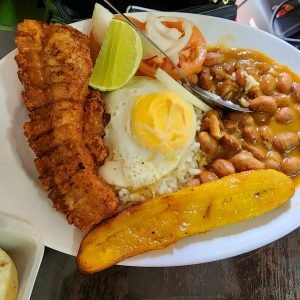
You will find bandeja paisa in virtually every local restaurant in Medellin for between 15,000 and 30,000 Colombian pesos — roughly $4 to $8 USD. It is filling enough to fuel an entire day of exploring the city.
Where to try it: Head to any traditional restaurante de comida típica in the Laureles or Buenos Aires neighborhoods for the most authentic and affordable versions.
Street Food in Medellin: What You Must Try
Street food in Medellin is everywhere — at busy intersections, near metro stations, in parks, outside churches, and along residential streets at night. It is cheap, delicious, and an essential part of daily life for millions of Medellin residents. Here are the top street food options you absolutely cannot miss.
1. Arepas — The Heart of Street Food in Medellin
The arepa is Colombia’s most beloved food, and in Medellin it reaches a completely new level of variety and quality. Unlike the plain white arepas of Bogotá, street food in Medellin features a dazzling array of arepa styles that locals eat morning, noon, and night.
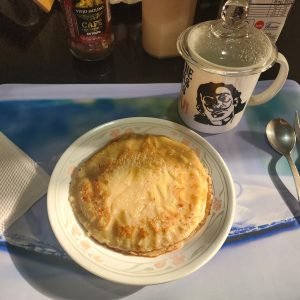
The arepa de chócolo is made from sweet yellow corn and topped with generous amounts of fresh white cheese. The arepa de queso is a cheesy fried version that pairs perfectly with a morning coffee. Both are sold at street stalls throughout the city, particularly in the early morning and late evening, for between 2,000 and 5,000 pesos.
2. Empanadas — The Queen of Street Food in Medellin
The empanada is arguably the single most popular piece of street food in Medellin. These half-moon shaped fried pastries are made from corn dough and filled with a mixture of mashed potato, shredded chicken or beef, and spices. The result is a crispy, golden snack that is impossible to eat just one of.
The correct technique: bite off the pointed tip of the empanada, pour in a generous splash of ají (a mild green chili sauce), and enjoy. A single empanada costs around 1,500 to 2,000 pesos — less than $0.50 USD. They are sold on virtually every street corner in the city.
3. Colombian Hot Dogs and Burgers — Late Night Street Food in Medellin
Street food in Medellin would not be complete without the Colombian hot dog and burger experience. Far from a simple sausage in bread, a Medellin hot dog comes loaded with crushed potato chips, pineapple sauce, mustard, ketchup, mayonnaise, shredded cabbage, and a mountain of melted cheese. It is chaotic, messy, and absolutely unforgettable.
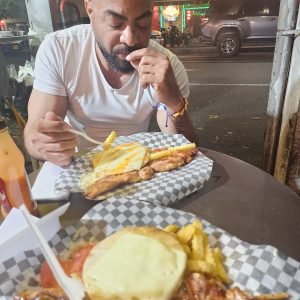
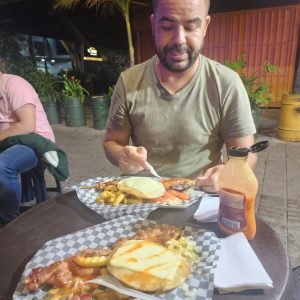
The best street food in Medellin at night is found in the El Poblado neighborhood around Parque Lleras, and in the Laureles area near Avenida El Estadio. Vendors typically set up from 8pm onwards and trade until the early hours.
4. Chuzos — Grilled Meat Skewers on the Streets of Medellin
A chuzo is a meat skewer grilled over charcoal by street vendors across Medellin, especially at night. The meat — usually beef, chicken, or pork — is marinated in local spices and grilled to order, then served with hogao (a cooked tomato and onion sauce) and small pieces of bread.
Chuzos are a staple of street food culture in Medellin’s nightlife scene. They cost around 3,000 to 5,000 pesos each and are best enjoyed standing at a street corner stall with a cold beer.
5. Buñuelos — The Classic Breakfast Street Food in Medellin
Buñuelos are deep-fried dough balls made from corn starch and fresh cheese. Light, slightly salty, and irresistibly crispy on the outside, they are the classic Medellin morning street food alongside a tinto — a small, strong black coffee.
Street vendors sell buñuelos in paper bags for around 500 pesos each. They are best eaten hot, straight from the fryer, which is easy to find in the morning hours near any busy park or metro station in the city.
6. Colombian Desserts and Sweet Street Food in Medellin
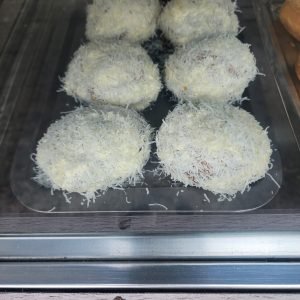
Sweet street food in Medellin is a world of its own. Bolitas de coco — small coconut balls rolled in shredded coconut — are one of the most popular traditional sweets sold at market stalls and street vendors throughout the city. Other popular sweet street snacks include cocadas, obleas (thin wafer discs filled with arequipe caramel), and papayuela en almíbar (papaya in sugar syrup).
Traditional Soups: The Comfort Food in Medellin
Soup is deeply embedded in the food culture of Medellin. Locals eat soup at lunch as a matter of routine, and the city’s traditional soups are among the most satisfying dishes you will ever try.
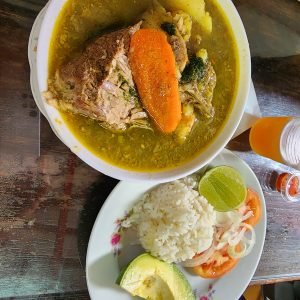
The sancocho is the king of Colombian soups and a cornerstone of food in Medellin. This rich, slow-cooked broth is made with large cuts of beef (or chicken), potato, yuca, plantain, corn, and fragrant herbs. It is always served alongside a plate of white rice, fresh avocado, and lime wedges.
Sancocho is particularly popular on weekends in Medellin, where entire families gather around large pots of the soup. You will find it in local restaurants citywide for around 15,000 to 20,000 pesos, always served with everything included.
Other must-try soups when exploring food in Medellin include mondongo (tripe soup with vegetables), sopa de frijoles (red bean soup), and caldo de costilla (rib broth), which is traditionally eaten as a hangover cure in the early morning hours.
Plantain Every Way: A Staple of Food in Medellin
Plantain is one of the most versatile and omnipresent ingredients in food in Medellin. It appears at breakfast, lunch, dinner, and as street food — cooked in multiple ways that each produce a completely different flavor and texture.
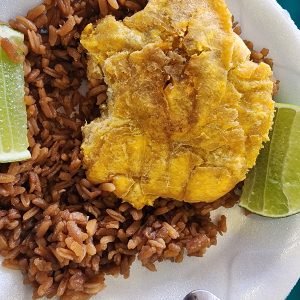
The patacón is a twice-fried green plantain that is pressed flat between frying sessions, resulting in a crispy, savory disc that is used as both a side dish and a base for toppings like hogao, shredded meat, and cheese. It is one of the most common accompaniments to street food in Medellin.
The tajada is a slice of ripe yellow plantain, fried until caramelized and sweet — you will find it on virtually every bandeja paisa and lunch plate in the city. The contrast between the savory beans and meat and the sweet plantain is one of the defining flavor combinations of food in Medellin.
Best Markets to Experience Food in Medellin
To truly understand food in Medellin, you need to spend time in its markets. These are the places where locals shop every single day, where prices are lowest, and where you encounter the most authentic flavors the city has to offer.
Plaza Minorista José María Villa
Plaza Minorista is the most important food market in Medellin and one of the most fascinating places in the entire city. Located in the city center, this massive indoor marketplace houses hundreds of vendors selling fresh produce, tropical fruits, meat, seafood, grains, and prepared foods.
The variety of exotic tropical fruits alone makes the visit worthwhile. You will find guanábana, maracuyá, lulo, pitahaya, tomate de árbol, and dozens of varieties you have probably never encountered before. It is the most direct window into the extraordinary biodiversity that underpins food culture in Medellin.
The market is open daily and is best visited before noon. You can eat a full cooked meal at one of the market stalls for under 10,000 pesos.
Central Mayorista de Antioquia
The Central Mayorista is the main wholesale food hub for the entire Antioquia region, located just outside the city center. While primarily a professional market, visitors are welcome. Several food stalls inside serve authentic paisa cuisine at the lowest prices you will find anywhere in Medellin.
Neighborhood Guide to Food in Medellin
Different parts of the city offer very different food experiences. Here is where to go depending on what you are looking for.
El Poblado — The International Food Scene in Medellin
El Poblado is Medellin’s most internationally oriented neighborhood and its most developed restaurant district. The area around Parque Lleras and Via Primavera offers everything from high-end Colombian cuisine to international restaurants, craft beer bars, and excellent late-night street food vendors.
Food in Medellin’s El Poblado tends to be slightly more expensive than elsewhere, but quality is consistently high and the atmosphere is lively. This is the best area for first-time visitors to begin exploring the city’s food scene.
Laureles — The Most Authentic Local Food in Medellin
For genuine food in Medellin without tourist pricing, Laureles is the neighborhood to visit. This affluent residential area is where Medellin families eat out on weekends, and where traditional restaurants have been serving the same recipes for generations.
The stretch along Avenida El Estadio is lined with traditional paisa restaurants, arepa stalls, and street food vendors. This is the single best area in the city to eat an authentic bandeja paisa at a local price.
Buenos Aires — Street Food Culture at Its Most Vibrant
The Buenos Aires neighborhood offers some of the most vibrant and authentic street food in Medellin. Known for its urban art scene and traditional working-class character, Buenos Aires is a neighborhood where food is still deeply connected to local life.
Several dedicated food tours in Medellin focus specifically on Buenos Aires — combining street food tastings with a walk through the neighborhood’s famous murals. It is one of the most immersive food experiences the city offers.
Tropical Fruits: The Underrated Side of Food in Medellin
One of the most underrated aspects of food in Medellin is its extraordinary selection of tropical fruits. Colombia is among the most biodiverse countries on earth, and Medellin’s altitude and proximity to multiple growing regions means an unparalleled variety of fresh fruit year-round.
Must-try fruits when exploring food in Medellin:
- Lulo — small orange fruit with a sharp, citrusy flavor, outstanding in fresh juices
- Guanábana (soursop) — creamy, sweet, and slightly tangy, often used in smoothies
- Maracuyá (passion fruit) — intensely aromatic, used in desserts, juices, and sauces
- Pitahaya (dragon fruit) — mild, refreshing, visually spectacular
- Tomate de árbol (tree tomato) — used in fresh juices and salsas throughout the city
- Borojo — a dark, dense fruit used in energy drinks and traditionally considered an aphrodisiac
Fresh fruit juice — called jugo — is one of the best and most affordable things to consume when exploring food in Medellin. A large fresh juice at any street stall or market costs between 3,000 and 5,000 pesos.
Food Tours in Medellin: The Best Way to Explore Local Cuisine
If you want to maximize your food in Medellin experience in limited time, a guided food tour is an excellent investment. A good food tour will take you to street food stalls, local markets, and neighborhood restaurants that most visitors would never discover independently.
Food tours in Medellin typically include 8 to 12 tastings, cover multiple neighborhoods, and last between 3 and 4 hours. They range from $30 to $60 USD per person and offer exceptional value given the depth of experience they provide.
A street food tour focused on El Poblado or Buenos Aires is particularly recommended for first-time visitors who want a curated introduction to food culture in Medellin in a single afternoon.
Practical Tips for Eating Food in Medellin
Final Verdict: Food in Medellin Is a Journey in Itself
Food in Medellin is more than sustenance — it is a living expression of paisa culture, history, and identity. From the humble empanada sold outside a metro station at 7am, to the epic bandeja paisa served with pride in a family restaurant in Laureles, every bite tells the story of a city that genuinely loves to eat.
The food in Medellin is generous, unpretentious, and deeply satisfying. It does not need elaborate presentation or international influence to impress. It impresses because it is honest — made with fresh local ingredients, cooked with accumulated knowledge, and served with the warm spirit that defines this city.
Whether you spend one day or three months in Medellin, make food a true priority. Eat at the markets, explore the street food scene after dark, try every variety of arepa you can find, and let the flavors of this extraordinary city become part of your travel story.
Medellin is waiting to be tasted. Are you ready?
🍽️ Ready to discover the best food in Medellin with a local guide?
0 Comment