
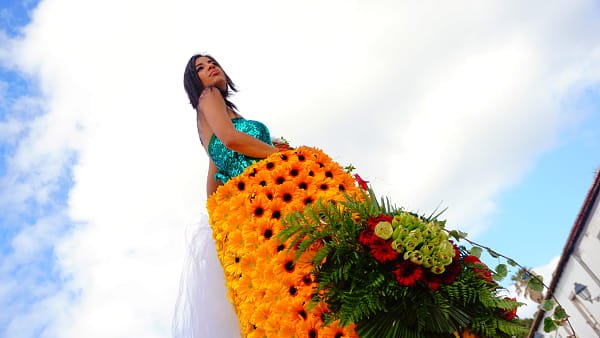

Feria de las Flores 2026 runs from July 31 to August 9, and this year’s edition is the 69th in the festival of Feria de las Flores history. More than 200 events across ten days, over half of them free, and a closing parade that brings a million people onto the streets of Medellín.
This guide of Feria de las Flores 2026 covers the full program day by day, which events are worth planning around, and the practical details most visitors find out too late.
What Is the Feria de las Flores 2026?
TheFeria de las Flores began in 1957 and has grown into Colombia’s most important cultural celebration. At its heart is the silletero tradition: flower farmers from the mountain village of Santa Elena who carry enormous floral arrangements on their backs.
These silletas can weigh up to 70 kilograms and take months to build. The craft passes down through families across generations, and UNESCO-recognised heritage status protects it.
Everything else — the concerts, the parades, the horse processions, the classic car show — grew up around that single tradition.
The 2026 theme is “Medellín te quiere y florece para ti”, roughly: Medellín loves you and blooms for you.
Feria de las Flores 2026: Key Dates
| Date | Event |
|---|---|
| Fri 31 July | Opening concert, Obelisco sector |
| Sat 1 August | Desfile Avenida Primavera (new for 2026) |
| Sun 2 August | Desfile de Chivas y Flores, Caminata Canina |
| Mon 3–Wed 5 August | Tablados across the comunas |
| Thu 6 August | Festival de la Trova final, Plaza Gardel |
| Fri 7 August | Desfile de Autos Clásicos y Antiguos |
| Sat 8 August | Noche Silletera, Santa Elena |
| Sun 9 August | Desfile de Silleteros — the main event |
Day-by-Day Program of Feria de las Flores 2026
Friday 31 July — Opening Night
The festival opens with the traditional tablado inaugural at the Obelisco, near the stadium sector. Free entry, large crowds, and the first of many outdoor concerts.
The Plazas de las Flores also open on day one. These are free public spaces with flower displays, food stalls, children’s workshops and live music. For 2026 they expand to Parques del Río, Parque de los Deseos, and — for the first time — the Museo de Arte Moderno de Medellín.
The Noche de Tango at Centro Comercial La Central also runs on opening night. Medellín’s tango tradition surprises visitors who only associate the music with Buenos Aires.
Saturday 1 August — Desfile Avenida Primavera
New for 2026. This parade opens the weekend programme along the Avenida Regional and is one of the additions the city introduced this year.
Arrive early for a decent viewing spot. Parades on the Regional draw large crowds, and the good positions fill fast.
Sunday 2 August — Chivas, Flowers and Dogs
The Desfile de Chivas y Flores is one of the festival’s most photographed events. Chivas are the brightly painted wooden buses of rural Antioquia, decorated with flowers and filled with musicians.
The same day brings the Caminata Canina, a dog walk that has become a family favourite. Expect costumes.
Monday 3 to Wednesday 5 August — The Tablados
Midweek belongs to the neighbourhoods. Twenty-one tablados — open-air music stages — run across the comunas and outlying corregimientos.
This is where the festival feels least touristic. The programmes lean heavily on local artists, and the city allocated over 1,000 million pesos in grants to support them this year.
If you want to see how Medellín actually celebrates, skip a parade and find a tablado.
Thursday 6 August — Festival de la Trova
The final of the Festival Nacional de la Trova takes place at Plaza Gardel.
Trova is improvised sung verse — two performers trading rhymed insults and wordplay in real time, backed by guitar. It is fast, funny, and largely untranslatable, but the crowd’s reactions carry the room even if your Spanish is limited.
Friday 7 August — Classic Cars
The Desfile de Autos Clásicos y Antiguos brings hundreds of restored vehicles through the city. Note that the route and format changed for the 2026 edition, so check the official programme on the day.
Saturday 8 August — Noche Silletera
Up in Santa Elena, the silleteros hold their own celebration the night before the main parade. This is the village where the silletas are built, roughly an hour from the city.
Going up for the Noche Silletera means seeing the tradition in its home rather than as a spectacle. Transport back down late at night is limited — plan it before you go.
Sunday 9 August — Desfile de Silleteros
The closing event and the reason the festival exists. 530 silleteros will take part in the 2026 edition, walking a route lined with spectators.
The parade runs along the Avenida Oriental. Free public viewing areas exist, but the seated graderías require passes — the city distributed 14,000 double passes by public draw ahead of the festival.
For 2026, all silleteros will wear a black ribbon in memory of victims of the recent floods across the metropolitan area and the country.
Free Events at Feria de las Flores 2026
More than 110 of the events organised by the city are free and open to everyone during the Feria de las Flores 2026. That includes:
- The opening concert at the Obelisco
- All 21 tablados across the comunas
- The Plazas de las Flores at all locations
- Street parades from public viewing areas
- Noche de Tango at La Central
Paid events are mostly private concerts, seated parade positions, and some venue-based programming.
How to Plan Your Feria de las Flores 2026 Trip
Book accommodation now
Hotel occupancy is projected at 70 to 75 percent during the festival of Feria de las Flores. Well-located places in El Poblado, Laureles and the centre book out weeks ahead.
If you have not booked yet and you are reading this close to the dates, widen your search to Envigado or Sabaneta — both are on the metro line and far less saturated.
Getting around
The metro is the most reliable option during the Feria de las Flores. Road closures around parade routes are extensive, and taxis get stuck in them.
Check which stations are closest to each event. Parade days in particular see heavy traffic restrictions across the centre.
What to bring
Sun protection matters more than most visitors expect. Parades run for hours in open sun at 1,500 metres of altitude, where the UV index is high even when the temperature feels mild.
Bring water, cash in small denominations for street vendors, and shoes you can stand in for three hours.
Safety
Standard urban precautions apply. Large crowds attract pickpockets — keep phones out of back pockets and bags in front of you during parades.
The city deploys significant security resources across the festival of Feria de las Flores period, and the main events are heavily policed.
Beyond the Feria de las Flores 2026 Program
The festival dominates the calendar, but Medellín is worth days on either side.
Comuna 13 has become the city’s most visited neighbourhood, known for its outdoor escalators, murals and the story of its transformation. Guided walking tours run daily.
Guatapé and El Peñol make an easy day trip — a monolithic rock with 700 steps, a lake, and one of the most colourful towns in Colombia.
Parque Arví, reachable by metrocable, sits in the mountains above the city and shares the Santa Elena area with the silletero communities.
Jardín Botánico hosts an orchid exhibition during the festival period and is a calm counterpoint to the crowds downtown.
Understanding the Silletero Tradition
Most visitors arrive at the closing parade knowing it involves flowers. The story behind it makes the event land differently.
Where it started
Santa Elena sits in the mountains east of Medellín, at around 2,500 metres. For generations, farmers there grew flowers and carried them down to the city to sell — on their backs, in wooden frames called silletas.
The frames were originally used to carry people. During the colonial period, porters carried passengers up and down these mountain paths in chairs strapped to their shoulders. The word survived; the cargo changed.
From market run to parade
The first organised parade took place in 1957 with 40 participants. The idea came from Arturo Uribe Arango, then part of the city’s tourism board, who proposed turning the everyday flower-selling journey into a public celebration.
That first edition was small. Nearly seven decades later, 530 silleteros take part, and the tradition is protected as national intangible heritage.
The four silleta categories
Not all silletas are the same, and knowing the categories makes the parade far easier to follow:
Tradicional — the classic format, flowers arranged as they would have been for market. Judged on faithfulness to the original style.
Emblemática — larger and more elaborate, often depicting symbols of Antioquia or Colombia.
Monumental — the giants. These can exceed two metres across and weigh up to 70 kilograms. Carrying one for the full route is a serious physical feat.
Comercial — sponsored designs, often carrying logos or commercial messages.
Watch for the silleteritos too: children carrying scaled-down silletas, learning the craft that will pass to them.
Practical Tips Most Guides Skip
Altitude affects you more than you expect. Medellín sits at 1,495 metres. It is not high enough to cause altitude sickness, but it is enough that a full day standing in the sun tires you faster than it would at sea level.
Parade times slip. Published start times are indicative. Events routinely begin later than scheduled, and the Desfile de Silleteros in particular takes hours to pass any given point.
Eat before the parades. Food options near parade routes are limited to street vendors, and queues are long. A proper meal beforehand saves you.
The weather is unpredictable. August falls between rainy seasons in Medellín, but afternoon showers are common. A light rain jacket takes no space and saves the day.
Cash still rules. Street vendors, small bars and most tablado food stalls do not take cards. ATMs near event areas run out during peak days.
Book restaurants in advance. The city’s better restaurants fill through the festival week, particularly in El Poblado and Provenza.
Where to Stay During the Festival of Feria de las Flores
El Poblado is the default choice for international visitors — walkable, dense with restaurants and nightlife, well connected by metro. It is also the most expensive and the most booked.
Laureles offers a more residential feel, good food, and easier prices. It is popular with longer-stay visitors and sits close to the stadium sector where the opening concert takes place.
Centro puts you closest to the parade routes but is the least comfortable option for staying overnight. Most visitors prefer to travel in for events.
Envigado and Sabaneta are separate municipalities south of the city, both on the metro line. If you are booking late, this is where availability survives longest.
Frequently Asked Questions regarding the Feria de las Flores
When is Feria de las Flores 2026?
From Friday 31 July to Sunday 9 August 2026. The Desfile de Silleteros closes the festival on the final Sunday.
How much does it cost to attend?
Most of the programme is free. Over half of the 200-plus events carry no admission charge, including the opening concert, all tablados, and street viewing of every parade.
Where does the Desfile de Silleteros take place?
Along the Avenida Oriental in central Medellín. Free viewing is available from public areas; seated stands require passes distributed in advance.
Do I need to speak Spanish?
It helps, but it is not essential for parades and concerts. English is limited outside tourist areas, so a translation app is worth having.
Is it too crowded to enjoy the Feria de las Flores 2026?
The main parades draw enormous crowds. The tablados and Plazas de las Flores are far more relaxed, and midweek is noticeably calmer than either weekend.
Where can I find the official programme?
The Alcaldía de Medellín publishes the complete schedule with times and locations for the Feria de las Flores at medellin.gov.co. Details can change, so check close to your dates.
Is Feria de las Flores 2026 Worth Planning a Trip Around?
If you have any flexibility in when you visit Colombia, yes.
Medellín has a strong year-round appeal, but the Feria de las Flores 2026 is the one week where the entire city turns outward. Streets close, neighbourhoods stage their own celebrations, and a tradition that started with farmers carrying flowers down a mountain fills the centre with a million people.
The crowds are real and the logistics take planning. Book early, use the metro, and build your schedule around two or three events rather than trying to catch everything.
Then let the rest of it find you.
Official sources: Alcaldía de Medellín – 2026 city events calendar and Colombia Travel – Flower Festival.
0 Comment